Twelve philanthropic ideas that could absorb hundreds of millions of dollars

Related news
A third wave of philanthropy may be bringing a new generation of donors ready to fund ambitious, scalable work to help solve the world’s biggest challenges. This raises a real question: can the field absorb that level of capital while staying cost-effective at the margin?
Over the years, our research team has made a number of pretty big bets on how money can be used to save and improve lives, but we’ve always had the suspicion that, with greater scale, we could achieve much more. Our recent discussions have helped to sharpen our ambitions across the wide range of areas in which our team has built expertise, ranging from infant health, education, and agricultural productivity to international diplomacy, clean energy, and technical AI safety.
We want to start a conversation about these types of big projects. In this article we’re sharing twelve of our ideas for philanthropic bets that would require serious capital. Some would need $10–$50M, others need $50–$100M, and a few could absorb $100M or more. Importantly, some would require sustained funding rather than a one-time injection, to keep the organizations doing the work alive and growing.
We’re not certain if any of these are the best ideas; we’re not even sure they’re all good. What we are sure of is that the potential is enormous, and it’s time to start thinking about how to realize that potential. If you think any of them are a good idea — or if you think any of them are a bad idea — we want to hear from you.
Scale advanced weather forecasting to increase crop yields
Scale: $10M–$50M

Hundreds of millions of smallholder farmers in low and middle-income countries (LMICs) make planting, input, and labor decisions under uncertainty about the weather: whole harvests can be made or broken by a single drought, heat wave, or monsoon. That uncertainty reduces returns to fertilizer, improved seed, and other productivity-enhancing investments. But recent AI advances have made accurate, locally-relevant forecasts cheap to produce, and the best AI forecasting models far outperform traditional models. Early deployments of these systems have demonstrated cost-effective returns on farmer incomes.
Deploying these systems widely and making them run smoothly at scale requires considerable investments in regional forecast development, closing weather station triangulation gaps, and local validation rollout. However, these investments are relatively inexpensive in return for the capability of governments to durably absorb modern forecasts into their meteorological agencies. The marginal cost of reaching each additional farmer can be driven close to zero. The model has been proven in South Asia and is ripe for replication into regions where forecasting infrastructure remains underdeveloped and weather risk is rising, like sub-Saharan Africa.
Strengthen African health systems
Scale: $10M–$50M

Essential medicines, vaccines, and diagnostics often fail to reach patients in LMICs because the value chain from approval to point-of-care is slow, fragmented, and opaque. Several bottlenecks have recently become tractable: AI is compressing review for government approvals from months to weeks, digital infrastructure is making procurement and stock data visible, and pull-incentive mechanisms are extending from vaccines to other medicines.
We founded the Catalytic Impact Fund in 2025 with the vision of using philanthropic funding to have a systemic impact, and have researched many programs and mechanisms in this space since its inception. We believe that at scale, it would be possible to use philanthropic capital to fund work across the pull side (regulatory pathways), push side (market shaping), and delivery side (digital logistics) to move diagnostics and treatment to patients faster and more reliably.
Invest in animal welfare research and development
Scale: $10M–$50M
Over 88 billion land animals are processed annually, meaning nearly 3,000 farmed animals die every second. Commercial agricultural research and development (R&D) maximizes livestock yields, efficiency, and density. Conversely, scientific R&D around animal welfare is severely starved of capital, leading to uncertainty around how farmed animals experience suffering and where this could be easily reduced. This leaves a critical data vacuum and vast evidence gaps precisely where the numbers of affected lives are largest.
Funding the expansion of existing and new research organizations could open up opportunities to alleviate the suffering of billions of animals per year. If well-targeted research can surface opportunities that reduce collective agricultural suffering by just 1%, it is the mathematical equivalent of eliminating a lifetime of misery for 880 million beings every year.
Philanthropic funding would support the scientific infrastructure to establish baseline data on animal stress biology, commission large-scale randomized controlled trials (RCTs), and engineer open-source tools to easily track welfare outcomes across global supply chains. The result of this funding is catalytic, providing the empirical foundation that larger institutional donors, governments, and commercial industries need to alter their policies. More funding in R&D is needed to turn an intuition-driven field into a data-backed discipline.
Use technology to reduce animal suffering at scale
Scale: $10M–$50M
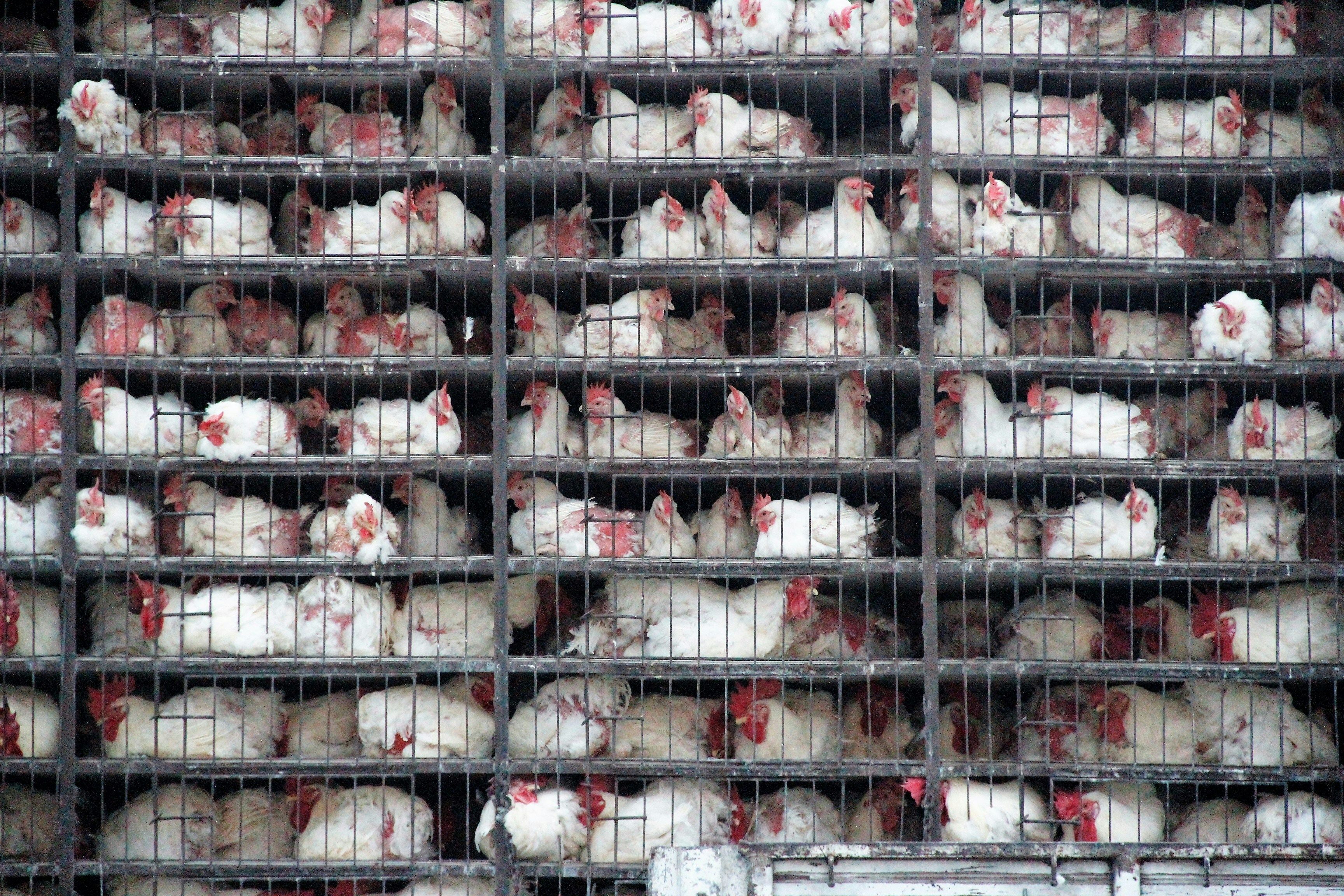
Animal welfare advocates have won enormous successes by extracting concessions like cage-free pledges from industrial meat producers. But we think that considerable progress can also be made by making animal welfare profitable for meat producers. We’d do this by funding the technologies that have a viable market-based path to scale after an initial investment, aligning industry incentives rather than fighting them. These technologies include in-ovo sexing to end male chick culling, electron-beam vaccines against lameness, and humane fish-stunning.
This is an underexplored area where there may be considerable low-hanging fruit that can be picked to massively decrease suffering in a way that remains compatible with corporations’ profit priorities . By generating demand for technological innovation in this space, we believe it’s possible to bring entirely new welfare-increasing technologies into existence.
Create infrastructure for independent AI character evaluation
Scale: $10M–$50M
Frontier AI labs publish model specifications describing how their systems should behave: epistemic integrity, refusal in high-stakes scenarios, prosociality, compliance with stated safety commitments. No standing institution provides continuous, independent testing of whether deployed models actually conform to these specifications. What systematic auditing exists is one-off academic work and labs evaluating themselves. The function currently performed by individual researchers on thin resources (blog posts, ad hoc testing, social media critique) lacks the institutional standing, continuous coverage, and methodological rigour that would make it a credible accountability mechanism.
We'd be interested in launching and funding an independent evaluation body that continuously stress-tests frontier models against their own published specs and reports publicly on conformance and gaps. This institution would need to scale with the number of labs publishing specs, with regulatory adoption of spec-based compliance frameworks, and with international safety reporting infrastructure as it develops.
Organize allied democratic frontier AI capacity
Scale: $10M–$50M

The semiconductor supply chain for frontier AI training is concentrated in a handful of democratic countries (Netherlands, Taiwan, Japan, South Korea, Germany) that collectively possess more structural leverage over AI development trajectories than they currently exercise. Forethought has recently argued this with respect to allied democracies specifically. No philanthropic or governmental program coordinates this leverage into a coherent democratic AI strategy. A coordinated strategy would give democratic supply-chain countries collective bargaining power over the terms on which frontier AI systems are developed, deployed, and governed, rather than leaving each country to negotiate bilaterally from a position of individual weakness.
With more capital, we think it will become possible to fund the policy research, diplomatic groundwork, and institutional design for a coalition of allied democracies jointly developing and governing frontier models, so that the trajectory of the most powerful AI systems is shaped by democratic accountability rather than by whichever single state or company moves fastest. Stage 1 costs are split across participating governments; philanthropic capital funds the coordination infrastructure that makes the coalition possible.
Strengthen state capacity in LMICs
Scale: $50M–$100M
In LMICs, programs that could massively improve people’s health, education, and overall well-being are often bottlenecked by state capacity. The cross-cutting functions that enable policy to reach people (including how governments manage staff, raise revenue, coordinate growth, and incorporate evidence-backed approaches) sit upstream of trillions of dollars in annual public spending. A marginal improvement in any of them compounds across many programs and outcomes at once, yet this is exactly the work donors neglect. Bilateral and multilateral funders pour money into sectoral verticals and underfund the institutional plumbing, partly because capacity-building is hard to fit into a results framework and lacks a domestic political constituency.
With more capital, we could enable LMIC governments to strengthen these functions, working on the government’s own priorities rather than imposing an outside agenda. What makes this idea especially compelling is its durability. While traditional aid and philanthropy buy a unit of service and stop the moment the money does, strengthening a government's capacity to deliver leaves something behind that keeps working. Done well, it also reduces the long-run need for aid, because a state that can budget, measure, and deliver for its own citizens depends less on outside funding to do so. For a donor, this would be a rare chance to fund progress toward their own eventual redundancy.
Systematically strengthen frontier science
Scale: $50M–$100M
Scientific productivity is enormously consequential for human well-being: even small increases in the efficiency of the research enterprise can lead to massive quality-of-life improvements for people around the world. Yet we don’t have good information about what kinds of practices produce the greatest advances, and even less so in a world in which advanced AI dramatically increases the output of all kinds of research processes—including ones with potentially dangerous applications.
Experimenting on science itself offers a path forward, but this is an enterprise with massive fixed costs. We’d be interested in exploring what it would look like to fund a research institute that conducts frontier scientific research while systematically experimenting with how science itself is done—testing different funding mechanisms, team structures, AI tool integration, and failure-tolerant research approaches across cohorts of early-career principal investigators. With scientific productivity declining despite massive funding increases and little known about which organizational practices yield the highest returns, the institute could generate evidence to improve how the global $2 trillion science enterprise allocates resources.
Develop pre-training AI capability removal
Scale: $100M+
Current approaches to preventing dangerous AI capabilities focus on restricting access to finished models (export controls, deployment filters, usage policies). A complementary approach removes dangerous capabilities at the training stage itself, before the model exists: identifying and filtering training data and objectives that produce specific hazardous capabilities while preserving general performance. Early experiments at the research scale show the approach is technically tractable, but these experiments need to be scaled massively.
Philanthropic capital can help to demonstrate viability at the scale of frontier training budgets. At this point, a successful methodology can become a standard component of responsible training pipelines across labs. A coalition of labs adopting pre-training filtering as standard practice could absorb capital at the hundreds-of-millions scale.
Build the right-of-center climate and clean energy civil society in the United States…
Scale: $100M+

U.S. climate philanthropy concentrates heavily on the left of the political spectrum, leaving right-of-center civil society thin. Sustainable progress on climate not only requires political support on both sides of the aisle (2025 amply demonstrated this), but also profits from incorporating the wisdom of different political traditions. Right-of-center groups, for example, are ideologically predisposed to back technological innovation and to emphasize the perils of over-regulation for clean energy buildout, both of which are priorities aligned with accelerating global decarbonization.
Since 2023, our Climate Fund has become one of the largest philanthropic funders of the right-of-center climate and clean energy civil society in the United States. While the field has clearly been growing as climate funders have been reacting to the second Trump administration, long-term oriented investments remain tiny compared to other fields of climate philanthropy. Right now, the field runs on the order of $100M per year, less than what some individual progressive environmental organizations spend annually. That funding also looks potentially fragile, and some of it may recede as funders turn toward preparing for a future Democratic administration. Overall, this means that reliable, well-understood philanthropic interventions—interventions that are regularly funded left-of-center and in more mature fields—can be put to work now (for example, through DEPLOY/US).
… and build such movements globally
Scale: $100M+
Outside the U.S., right-of-center oriented climate philanthropy appears far more neglected. Europe lags behind the U.S., though it is also less polarized on climate, and remains the only region beyond the U.S. with at least a nascent right-of-center ecosystem.
Complete figures are hard to come by, but the largest such network of organizations globally, Our Common Home (OCH) spends about $35M per year funding efforts across dozens of countries, including India, Japan, South Korea, and several European countries. This constitutes only about 0.25% of climate philanthropy. These organizations have ample room for funding and can be scaled significantly, increasing the robustness and efficacy of the global climate response.
Expand effective education systems worldwide
Scale: $100M+
Though billions of dollars are spent annually on education, the most robust, evidence-backed approaches receive only a small fraction of this funding. These approaches have the potential to massively expand literacy and numeracy for millions of children in low-resourced school systems, durably increasing learning, lifetime income, and human capital at a societal level.
In the last three years, Founders Pledge has moved more than $80M to the most effective programs working to do this, and we’ve built a robust methodology for evaluating them. These organizations deliver interventions that reliably boost learning in a way that is supported by multiple randomized controlled trials, and they do so at an unusually low cost per student. Our evaluations show these organizations have considerably more room to scale. We think they can absorb tens of millions of philanthropic funding to expand internationally before transitioning their work to governments. We already direct funding to a broad set of approaches in this area, from teaching at the right level, to educational television programming, to improving pre-primary teaching, to structured pedagogy. Many of these opportunities are ready to fund today.
What comes next
These ideas are a sample of what we see when we look hard for places where philanthropy could scale and stay cost-effective. We’re confident there are many more we haven’t found yet.
We think the coming wave of philanthropy will make transformative change possible, and we’re excited to explore some of the most exciting avenues for making this change happen. If you’re also excited about these types of ideas, we’d like to partner with you on researching which bets are worth making and what it would take to make them work.
- Scale advanced weather forecasting to increase crop yields
- Strengthen African health systems
- Invest in animal welfare research and development
- Use technology to reduce animal suffering at scale
- Create infrastructure for independent AI character evaluation
- Organize allied democratic frontier AI capacity
- Strengthen state capacity in LMICs
- Systematically strengthen frontier science
- Develop pre-training AI capability removal
- Build the right-of-center climate and clean energy civil society in the United States…
- … and build such movements globally
- Expand effective education systems worldwide
- What comes next