Why We’re Deploying $3M+ into European Climate Policy
Part 2 of 5 in a series explaining the decisions behind the Climate Fund’s first ~$20M of grants in 2026.
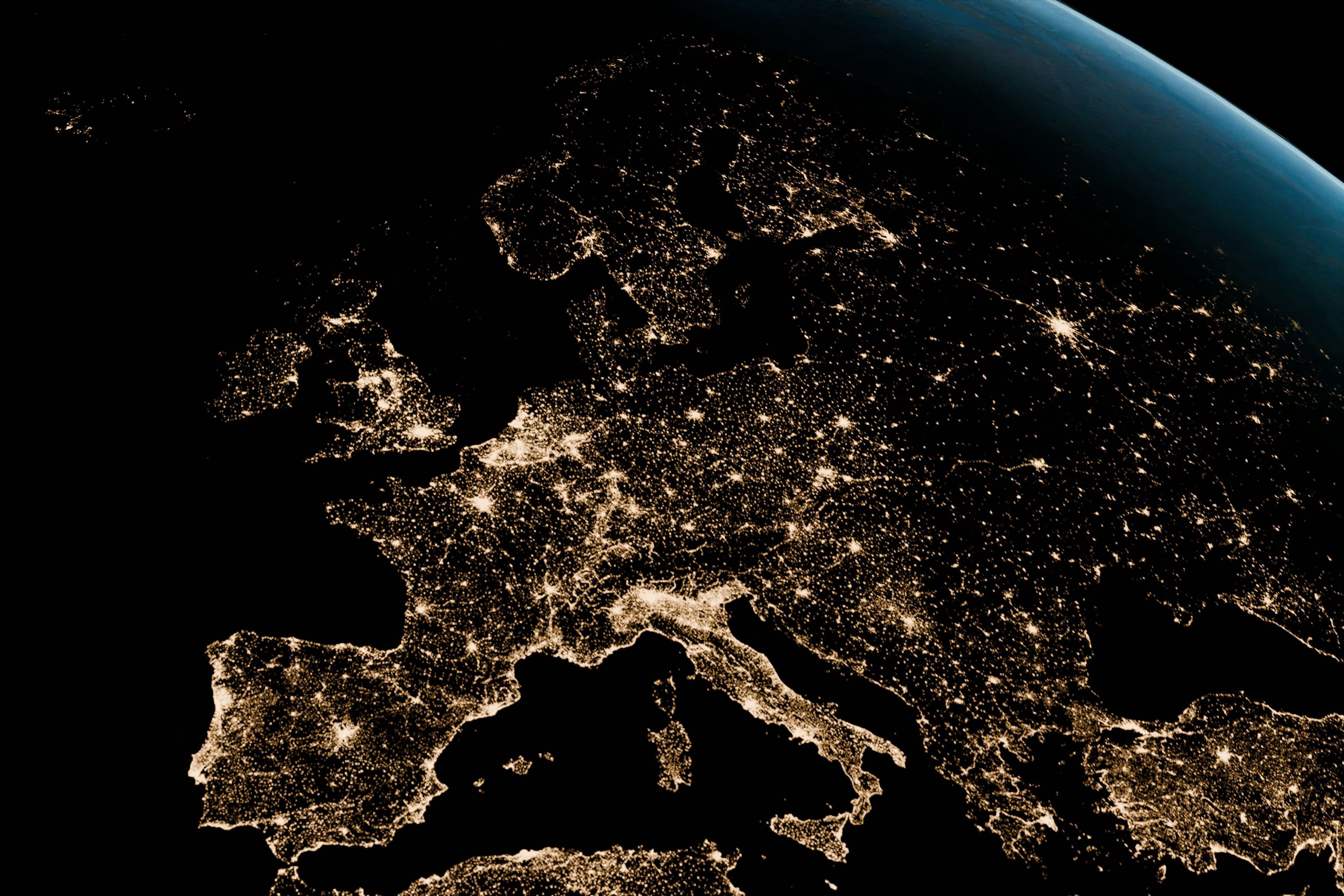
This quarter, we’re making our most Europe-heavy grant round to date. We’re directing over $3.5M (including $1M co-funded with Effektiv Spenden) into five interconnected bets on European climate and energy policy, four of which we describe in this blog post.
This builds on the foundation we laid at the end of 2025, when we deployed $1.2M to the EU Climate Innovation Hub and $456K to the Cambridge Institute for Sustainability Leadership (CISL). Partly, our upscaling is simply chronological: we hadn't yet scaled our European work to the degree we saw justified and wrote about last year in our report Robust to Risk.
That said, there is something especially pivotal about this moment in Europe now.
As we discussed in our previous post on the Iran crisis and climate philanthropy, the current energy shock hits Europe harder than almost anywhere else. Europe's dependence on liquefied natural gas and oil imports means this crisis reaches into its electricity, heating, industry, and transport sectors simultaneously. Unlike emerging Asia, which largely bought Russian gas at a discount, the invasion of Ukraine in 2022 and the sudden weaning off Russian gas also makes this the second energy crisis in four years.
The result is a high-variance environment where both a severe climate policy backlash and a historic doubling down on decarbonization have become more likely, and where well-placed philanthropic capital can help determine which path Europe takes.
Why should climate philanthropists invest in Europe?
If you've been following the global landscape of climate philanthropy, you know that Europe's contribution to decarbonization looks different from that of the United States’s or China’s.
Europe's additionality lies precisely in the technologies that require explicit climate policy commitments and instruments to become viable: industrial heat, cement, steel, and other hard-to-decarbonize sectors. These are the technological bets where successful innovation would have outsized global consequences, and where the rest of the world is underinvesting or lacks sufficiently supportive policy environments (e.g., no strong carbon prices).
Had Harris won the 2024 elections, the U.S. would probably have moved ahead of Europe on climate wholesale. Instead, the current U.S. administration's much narrower technology focus—nuclear, geothermal, critical minerals, grid infrastructure—makes Europe's role relatively more additional and complementary. Europe and the U.S. are, by accident, developing a division of labor on clean technology. But Europe's half of that division depends entirely on whether its policy environment can hold and its competitiveness can increase.
If Europe doesn't transform that environment, it risks getting further squeezed between China's massive industrial capacity and the United States's superior ability to scale new technologies, from geothermal to long-duration energy storage. We emphasized this in Robust to Risk, and the situation has only accentuated since then.
The Climate Fund’s Q1 2026 grants in Europe
Our four European grants this round share a common logic: each (a) targets a point in the policy landscape where the outcome is genuinely uncertain, (b) where civil society capacity is thin relative to the stakes, and (c) where philanthropic capital can be unusually leveraged.
We briefly discuss each grant individually before coming back to this common theme.
Defending the European Emissions Trading System (~$2.2M across E3G, Jacques Delors Institute, CISL, Bellona, EPICO; co-funded with Effektiv Spenden)
Geopolitical instability and a climate backlash have put Europe and European climate policy at a crossroads, putting pressure on key European climate policies such as the EU Emissions Trading System (EU ETS). This pressure is turbocharged by the largest shock on fossil fuel prices and availability at least since the oil crises of the 1970s.
Without a continued strong EU ETS, it is clear that Europe’s contribution to global decarbonization will be severely diminished because those technological bets where Europe’s contribution is most additional—industrial decarbonization and other bets in hard-to-decarbonize sectors in particular—all require the EU ETS to stabilize the business case of demonstration and early deployment. Despite this, philanthropic support for the EU ETS has been diminishing at exactly the moment when it needs to increase.
We usually do not support such broad policies; the debate around the EU ETS is heavily politicized and has large distributional consequences, making us expect lower tractability than more surgical interventions. But we do think this factor is outweighed by the EU ETS’s outsized importance for the feasibility of Europe’s innovation bets.
This is why we are stepping in to fund a coalition of organizations with a strong track record on the EU ETS—E3G, the Jacques Delors Institute, CISL, Bellona, and EPICO—to engage more fully in defending the EU ETS’s contribution to global decarbonization, with a focus on preserving the integrity of incentives for emerging technologies.
Reforming the EU Innovation Fund (€500K, Cleantech for Europe)
The EU Innovation Fund has roughly €40 billion to deploy by 2034, making it Europe's main public instrument for scaling strategic clean technologies. On paper, it's exactly the kind of de-risking capital the sector needs. In practice, it's struggling badly: disbursement rates sit below 3% of awarded funds, which are themselves subject to a 5% application success rate. These challenges have been documented in the press and by the European Court of Auditors.
Billions in public capital for clean technology are effectively stuck at a time where Europe simultaneously laments a lack of competitiveness and a robust innovation ecosystem and where demonstrations and early deployment of key innovations such as industrial heat, geothermal, and long-duration energy storage could make material differences to global emissions.
With the 2026 review of the EU Emissions Trading System (EU ETS), from which the Fund gets its funding, the European Commission is looking to improve the Fund. Meaningful reform could transform how Europe channels public investment into frontier clean technology. Despite its importance, there is a dearth of advocacy and civil society engagement on the Innovation Fund, an instrument that would have a whole suite of civil society actors behind it in the American context.
Cleantech for Europe is well-positioned to push for that reform. As the voice of the cleantech industry in EU policy, they represent leading cleantech companies and investors, and have sat on the European Commission's Innovation Fund Expert Group since 2023. We are turbocharging their ability to engage on a reform we believe could significantly increase Europe's contribution to global decarbonization.
Building support coalitions for European competitiveness and cleantech policies (Cleantech for Europe, €630K)
Four major policy processes are converging in 2026 that will shape Europe's climate, industrial, and financial architecture for the rest of the decade: the EU ETS and Innovation Fund review, the Industrial Accelerator Act (IAA), and the Multi-Annual Financial Framework (MFF) governing public spending from 2028–2034.
While many of those are tracked by many civil society actors (e.g., the MFF), we also see some clear weaknesses in the existing civil society response. The Innovation Fund is largely ignored by civil society. And traditional climate organizations are often ill-placed to speak to this moment—one of retreat as climate as a primary policy motivation—and to credibly embrace and represent a vision of competitiveness through cleantech that aligns with the priorities of center-right players.
Cleantech for Europe has built a network of allied organizations across France, Iberia, Italy, the Nordics, the Baltics, Central and Eastern Europe, the Benelux, and the DACH region.
Given that credible policy change in Europe requires multi-country coalitions, we are supporting their pan-European advocacy capacity: in particular, the ability to link positions between national capitals and Brussels at a moment when Council-level dynamics will be decisive.
A Geothermal Surge for Europe (€350K; European Geothermal Energy Council, Future Cleantech Architects, Cleantech for Europe)
Europe's geothermal conversation isn’t appreciating the promise of next-generation geothermal technologies at sufficient depth. At the most fundamental level, the European Commission and member state policymakers have been operating with an outdated picture of what geothermal can deliver, as geothermal has been neglected in policy discussions in Brussels and European capitals and the surge in attention we have observed in the U.S. has not yet happened.
We're supporting a coalition to push for a much more ambitious European vision for geothermal, timed to the upcoming EU Geothermal Action Plan expected to be rolled out in May.
We believe that the Iran crisis, with its profound effects on European energy security, provides a golden opportunity to increase the salience of geothermal, given it is a domestic energy resource that could reduce Europe’s dependence on imports in home heating – an area where Europe’s geothermal industry has an edge—industrial heat, and electricity.
Acting during a pivotal window
Europe is at an inflection point where its direction of travel is genuinely contested. That's what makes this a moment for philanthropy to lean in, and it's why we've designed this grant round to target the specific pressure points where the balance can be tipped.
The Iran crisis has amplified both the risks and the opportunities. Whether this crisis produces the same outcome depends in part on the strength of the coalitions, the quality of the reform proposals, and the persuasiveness of the case for clean technology that civil society can assemble right now.
Philanthropic support for European climate policy interventions has been thinning precisely as the stakes have risen. We think that's a mistake, and we're acting accordingly.
In the third post of this series, we'll discuss why we're renewing our largest U.S. investment in energy innovation advocacy, and how we evaluate grantees when the macro conditions shift as dramatically as they have this year.