$178M Over Six Years: Bold Gifts Enable Bold Bets

▲ Source: Unsplash
Last week, the Founders Pledge Climate Fund received a $60M donation, the third consecutive year of transformational support from an anonymous donor.
Between anonymous donations and the Founders Pledge community, the Climate Fund has received a total of over $178M to date, enabling us to deploy bold grants where they’re needed most.
“From being able to allow organizations to prepare more ambitiously for Trump 2.0 in 2024, to allocating quickly when the Iran energy crisis transformed the climate picture this year, this series of gifts has enabled us to bring our secret sauce to scaling our grantmaking strategy. We are able to analyze the changing climate situation, stay ahead of the curve, and put our money where our mouth is in service of systematically reducing climate risk by going where others aren’t going for the wrong reasons. Thank you for making our work possible.”
— Johannes Ackva, Climate Fund Manager
What have our donors unlocked so far?
When we launched the Climate Fund six years ago, most of climate philanthropy was betting on a single future, one where climate momentum kept building and political support kept climbing. We weren't so sure. Since 2021, we've warned that this momentum was fragile and that philanthropists should hedge against the world where it reversed.
Climate policy is now contested at a level we haven't seen in over a decade. Thanks to the continuity of these large anonymous gifts, as well as continued support and donations from our community, we’ve been able to build a portfolio of bets designed to hold up in a world like the one we’re in.
We aim to spend down all donations within a year, so we’ve used all donations to meet the moment. In recent years, your support has enabled us to respond quickly to a rapidly changing landscape:
- In 2023 and 2024, we were able to prepare early for the incoming Trump administration.
- In 2025, we were able to react very quickly to disruptive changes in the ecosystem, like the unexpected collapse of Breakthrough Energy.
- In 2026, we’ve been able to act quickly in light of the Iran War and its implications for energy and climate.
There’s more hard work ahead, but thanks to your collective support, we’ll be ready for it.
What are your donations supporting now?
With our overall strategy holding strong, we will continue to pursue our diverse portfolio of bets with even greater ambition. Here’s a first look at a few recent examples of the grantmaking happening now.
Investing in coalitional diversification around the world
One of the Climate Fund’s main investments in the past few years has been coalitional diversification: building support for climate and clean energy across the political spectrum, especially among underrepresented right-of-center voices and constituencies that are essential for continued progress under Republican administrations.
Johannes recently spoke on a panel at the International Conservative Climate Strategy Convening, where we were recognized as among the largest funders of this kind of coalitional diversification work.
We have done most of this work in the U.S., both because the U.S. matters hugely for our global climate trajectory, and because its climate politics are unusually polarized. But climate is a global problem, and the case for right-of-center engagement generalizes to other geographies, many of which are far more neglected. The risks facing different regions don’t move in lockstep, so diversifying geographically ensures that even when climate policy faces backlash in one region, our work in other regions continues to make an impact.
Two new grants we’re deploying this quarter mark our first serious step in this direction:
- Project Tempo will research the adaptability and resilience of EU climate governance, with dedicated programs in France, Italy and Poland. Europe is a natural priority now, given that the Iran energy crisis has intensified the political crisis there, and particularly ahead of the many pivotal 2027 elections coming up.
- Our Common Home seeds engagement with right-of-center voices in Europe and in Japan, backing the conservative constituencies that other climate funders have largely left unfunded. Japan’s right-leaning government makes it especially fertile ground for a right-of-center decarbonization approach.
Continuing to back underfunded strategies worldwide
There are still many climate risk reduction strategies that remain underfunded relative to their importance. For example, most climate philanthropy still focuses on the U.S. and Europe, but most future emissions growth will actually be concentrated in the fast-growing economies of emerging Asia. Domestic coal capacity is an important part of the energy security of much of emerging Asia, and new coal plants are unlikely to be retired, which means that repowering them with low-carbon heat sources is a particularly impactful way to reduce projected emissions.
China alone accounts for nearly a third of global emissions, yet receives less than 6% of climate philanthropy. We’re in the process of making a second tranche of grants to Tsinghua University for their coal plant repowering work.
“Thanks to Founders Pledge, we've been able to work on [coal repowering] for the past three years. We conducted China’s first systematic and in-depth study on coal to nuclear. Our study and paper publications enriched the knowledge base on this topic, inspired interest from leading utilities, and enabled coal to nuclear to gain its first visibility from policymakers.”
—Professor Xiliang Zhang, Executive Director of the Institute of Energy, Environment, and the Economy at Tsinghua University
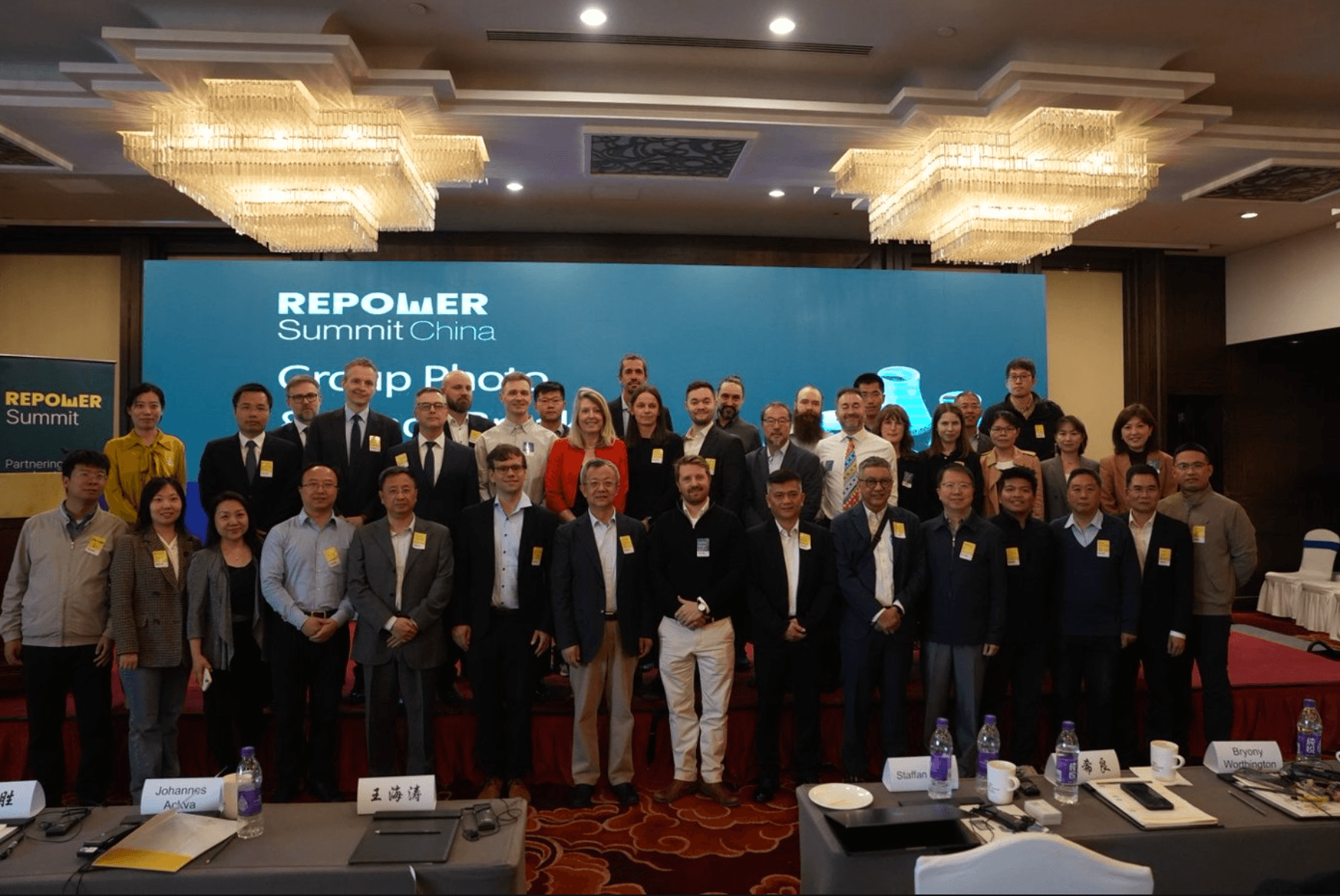 Johannes attending the Repower China Summit
Source: Tsinghua University
Johannes attending the Repower China Summit
Source: Tsinghua University
Applying rigorous methodology for grantmaking at scale
Climate grantmaking has never had the luxury of the randomized controlled trials that anchor direct-delivery global health, which makes it difficult to accurately determine where our funds could be most cost-effectively deployed. Much of our methodology work over the past few years, which Johannes and Stan presented at EA Global London this year, has been about building something rigorous for exactly these conditions.
When the U.S.-Iran war reshaped Europe's energy politics, our new impact model let us estimate how much of our allocation should shift toward Europe. This allows us to deploy more capital, faster, without loosening our standards, and this is a large part of why we are confident placing bigger and more ambitious bets.
Staying ready for what we can’t predict
We know from experience there will be unknown unknowns. A resilient portfolio also means holding capacity in reserve for the bets nobody sees coming. Being open to wildcards, in the context of climate, means keeping the flexibility to move fast when a major funder exits, a policy window cracks open, or a neglected technology becomes tractable. Because climate philanthropy is a race against the clock, and the cost-effectiveness of a grant depreciates quickly, this readiness is central to how we generate impact.
“When the funding for U.S. energy innovation advocacy collapsed across the ecosystem, an entire network of critical policy organizations that had been working on US energy innovation advocacy faced real fragmentation and funding cuts. Founders Pledge rapidly stepped in to help us create the Innovation Initiative, which allowed our coalition to defend crucial policy and equip ourselves to build on our collective progress instead of starting over.”
—Adria Wilson, Director of the Innovation Initiative
Where will the next dollar go?
The grants we describe above are recent examples, rather than a fixed set of priorities. We support a large and fast-moving set of bets, so it’s impossible to say exactly what we will grant to throughout the next year. That said, we constantly analyze the environment and look for “philanthropic alpha”: changes in the world where philanthropy might thus far have under-reacted (or overreacted).
The single biggest force shaping that picture right now is the Iran war and the energy crisis that followed, which has raised the salience of energy security and reshaped the political terrain for climate and energy policy beyond the climate policy backlash starting in 2023 and accelerating in 2024.
This crisis has severe direct effects on the prevalence of energy security, price sensitivity, and the perception and relative feasibility of climate policies. It also has broader macro effects through inflationary and geopolitical factors.
The effects vary across geographies:
- In Asia beyond China, where exposure to disruption in the Strait of Hormuz is high, domestic coal capacity has become even more central to energy security, while uptake of renewables and EVs has also surged. We think examining whether new opportunities exist to leverage this momentum towards domestic energy for advancing cleantech is a promising avenue for future funding.
- In Europe, the persistence of the crisis has deepened the political and cost-of-living pressures already building ahead of a series of pivotal 2027 elections. This has already made our investments in coalitional diversification work in Europe more pressing than when we originally started considering them, but also has made us double down on defending critical EU policy instruments while also leveraging this moment’s opportunities. We expect to continue escalating this work going forward as Europe enters a critical period of policymaking and a changing political landscape.
- In the U.S., the disruption and rebuilding of energy innovation advocacy reinforces why our approach is designed to stay robust across changing administrations. Prepping for 2028/2029 will take center stage for our work even more after the midterm elections. One risk is that climate philanthropy might return to habitual imbalances once the Democratic Party is expected to be back in power. We think it’s crucial to continue investing in right-of-center work to ensure work continues the next time the elections swing the other way, but also be mindful of the actual changes in political power.
Across all these geographies, we will continue to fund solutions that are neglected for the wrong reasons, and stay ready to move as the picture changes.
 Johannes and Stan presenting at EAG London
Thank you to everyone who’s supported our Funds
Climate is only one lens through which we try to solve the world’s biggest problems. Across many cause areas, we look for interventions that hold up under worst-case scenarios, that leverage the resources society already has, and that are underfunded for the wrong reasons.
Our Funds model lets any donor put money behind specialized, research-backed solutions aimed at very different global challenges:
- Global Catastrophic Risks Fund: works to reduce threats like nuclear war, catastrophic pandemics and unsafe AI, giving anyone the means to help manage the risks of emerging technologies and shore up global stability.
- Catalytic Impact Fund: targets moments in global health and development where a small investment can generate outsized, lasting change.
- Patient Philanthropy Fund: safeguards humanity's long-term future by building a reserve of capital that can be deployed when it is needed most.
Your gifts let us continue to anticipate changes in the world, act ahead of the curve when we can expect things, and react quickly when we can’t. We want to thank this anonymous donor, as well as our entire Founders Pledge community for being the backbone of what we do. Everything we’ve built has rested on the members who backed the Climate Fund from the very beginning. Our research, grantmaking, and field-shaping work wouldn’t exist without all of you.
We’re moved by our anonymous donor’s extraordinary demonstration of continued trust in the Climate Fund, and grateful to all of the members who make our work possible.