Questions in Global Health and Development We’re Investigating in 2026
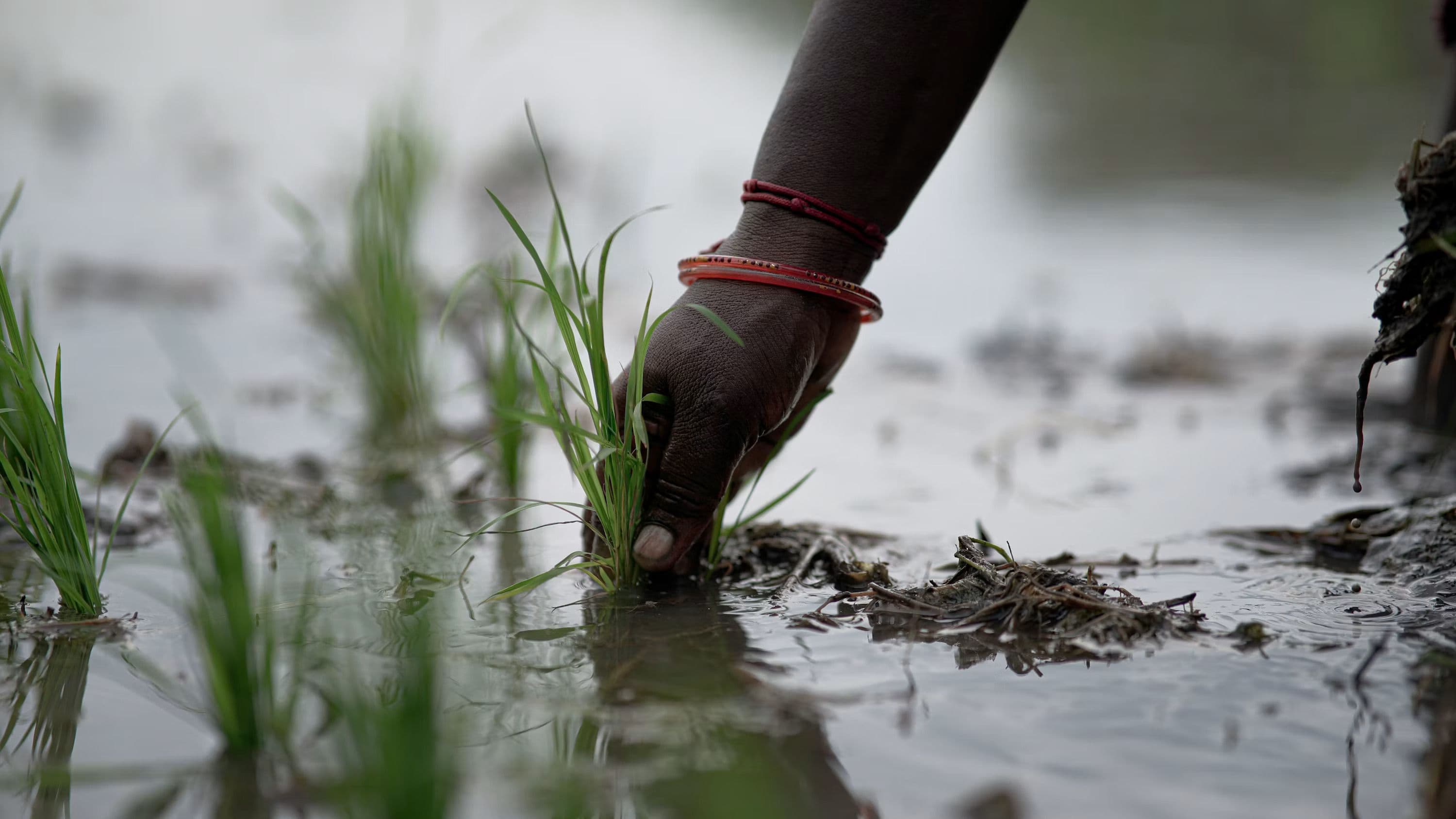
What would it take for low-income country governments to fund their own health and education priorities without relying on foreign aid? Why are smallholder farmers in Sub-Saharan Africa no more productive today than they were decades ago, and what would break that cycle? Why are millions of preventable deaths due to air pollution being overlooked by mainstream funders?
These are the kinds of questions driving our research at the Founders Pledge Catalytic Impact Fund, working across the landscape of global health and development. Rather than starting from a predetermined sector or intervention type, we start from problem statements and questions: structural challenges where we believe modest, well-targeted funding could trigger outsized change.
This blog shares what we’re investigating, what we’ve learned so far, and how our process works.
Why we start from questions, not sectors
The most impactful funding opportunities in global health and development often don’t sit neatly within a single sector. Helping a government improve its tax administration might do more for child health outcomes than funding a clinic if the additional revenue gets allocated to a sustainable budget line for immunizations. Weather forecasting infrastructure for farmers is an agricultural intervention, a climate adaptation tool, and an economic growth engine simultaneously.
So, rather than organizing around health, education, or agriculture, we identify big structural problems and then follow the evidence to wherever the most cost-effective and catalytic levers are. We look for opportunities that could trigger transformational change, not just supporting people directly in the short term, and that are neglected by other funders, often because they’re too uncertain, too cross-cutting, or too hard to measure with conventional methods.
The Catalytic Impact Fund is unusual in the effective giving space because we face very few constraints: no sector requirements, no geographic restrictions, no minimum evidence threshold beyond our own analytical standards. We’re risk-neutral, comparing high-certainty and high-variance opportunities on equal terms with analytical rigor, using forecasting and Monte Carlo simulations to manage uncertainty.
That freedom is a genuine strategic asset, but only if we consider our options strategically and rigorously. Being unconstrained doesn’t mean being unfocused. It means we need a rigorous process for deciding where to direct attention.
How we decide where to focus
We invest the majority of our research capacity in proactively chosen investigation tracks.
To select those tracks, we assess a long list of ideas across several dimensions:
- (1) The scale and severity of the problem
- (2) The degree of neglect by other funders
- (3) Whether catalytic mechanisms exist that could clear our high cost-effectiveness bar
- (4) Whether funding opportunities exist that could trigger a transformational and durable change at large scale
We pursue 2–3 investigation tracks at a time, revisiting them at least quarterly to assess where the value of our time and funding can stretch the furthest. At each review, we make an explicit decision: go deeper if we’re finding promising funding opportunities, continue exploring if we need more information, or deprioritize the area to allow us to pick up a new area with higher marginal impact potential.
In our first round of investigation, we looked into three areas. Here’s where we stand on those areas now:
Financial resilience: how do low-income countries become less dependent on aid?
Status: actively pursuing funding opportunities across multiple levers.
In 2025, aid commitments fell by up to 25% versus 2023 levels as several major governments cut funding.1 This gap poses dire risks for low-income countries, which depended on aid for almost half of government expenditure before the cuts.2
Our research has found promising pathways to ease the crisis. According to our rough estimates, about half of prior aid flows weren’t going to the most critical geographies, so re-allocation can stretch remaining budgets by focusing on the most essential and cost-effective services.3 At the same time, the long-term financial stability of aid-dependent countries depends on domestic resource mobilization, and there are light-touch options to help tax systems perform better. Therefore, Founders Pledge is now focused on the challenge of replacing lost revenue for life-improving programs in the regions where essential services are most at risk from budget cuts, while also improving how existing money is spent.
We’re pursuing opportunities across three complementary levers:
- (1) Building state capacity for domestic revenue, particularly through property taxes and tax administration improvements—interventions that are progressive and help governments collect revenue they’re already owed, particularly from multinational corporations and property-owning citizens, without requiring difficult legislative change.
- (2) Improving how aid and government budgeting is allocated so that limited funding prioritizes the most cost-effective interventions and reaches the most vulnerable countries.
- (3) Addressing the disbursement bottleneck: Even where aid money has been budgeted, weakened implementation capacity in government agencies risks delaying or preventing it from getting out the door. Allocated does not mean administered.
We are also keeping an eye out for indirect ways that government spending can be improved. Digital Public Infrastructure, for example, improves the efficiency of government data handling while providing greater sovereignty. We believe these opportunities can be complementary to resource mobilization, and continue to explore how Founders Pledge can support in this field.
Agricultural productivity: what will break the poverty cycle for smallholder farmers in Sub-Saharan Africa?
Status: pursuing specific pathways in policy reform and weather forecasting.
At least a third of individuals 4 in low-income countries rely on farming for a significant portion of their income, yet a recent study indicates that total factor productivity for smallholders declined by 3.5% annually over the past decade. 5 This contributes to the well-documented, growing gap in average yield attainment between Sub-Saharan Africa (SSA) and other regions of the world.
If average productivity increased, it would expand the staple food supply; free up labor, including children, to pursue education; and raise household incomes to support health and well-being. However, targeting single constraints like credit, training, or improved inputs in isolation rarely works because multiple constraints bind simultaneously and lifting one just means another caps the returns.
This led us to prioritize structural and bundled interventions. We’re pursuing two pathways:
- (1) Country-level technical assistance for coordinated policy reform to help governments address upstream barriers like transport infrastructure, input markets, trade policy, and extension services in concert rather than piecemeal, as well as prioritizing specific policies based on the context-specific barriers.
- (2) Building the enabling environment to accelerate farmer access to accurate AI-driven weather forecasting in SSA, which addresses the risk constraint that discourages farmers from investing in higher-productivity inputs and practices. We recently funded an expansion of forecasting models projected to reach 38 million farmers in India, and we’re looking to accelerate similar efforts in Sub-Saharan Africa as a public good integrated into government systems.
Air Pollution: An example of where we’ve stepped back
Status: Deprioritised after investigation, with limited monitoring of remaining leads.
An estimated 6.7 million people die annually due to air pollution,6 and the burden appears to be growing in many low- to middle-income countries. The subcontinent of Sub-Saharan Africa received less than 1% of global air quality funding in 2023, according to the Clean Air Fund, despite bearing a substantial share of the burden.7 If we ranked the top 10 cities across the globe by using population-weighted levels of one of the primary pollutants, Particulate Matter 2.5, five would be in SSA. Despite this, the entire region receives $12 million annually in funding for outdoor air pollution. Beijing alone received $3.8 billion in 2017-2021.
Despite targeted efforts, we haven't yet found a tractable, highly cost-effective funding pathway to accelerate air pollution improvement in Sub-Saharan Africa on a large scale, although we remain responsive to shifts in the ecosystem of opportunities. The region currently lacks basic monitoring infrastructure (a problem worsened by the closure of US embassy air quality monitoring in early 2025), which means it’s difficult to target interventions effectively. Our initial research indicated that improving monitoring and data transparency can translate to improved policies that subsequently reduce pollution levels. However, the evidence of this success is relatively limited, and few organizations in the space have the political legitimacy to translate data into policy action.
There is an opportunity cost to our time. Since we know there are other major challenges to address that have current opportunities for funding, we are deprioritizing SSA air pollution due to lack of current feasibility. We expect to pick up a new focus area in Q2.
What’s next
We’re working on making this process faster and sharper. Our first investigation cycle taught us that deep landscape research is valuable but needs to be time-boxed more aggressively to get funding out the door as quickly as possible. The goal is to move from “promising question” to “funding opportunities under evaluation” where relevant in 2–3 months. We’re also developing a more systematic way to compare candidate investigation questions against each other before committing research time, so we can be more confident that we’re asking the most impactful questions.
If you have ideas for funding opportunities that fit our ongoing investigation tracks, we’d like to hear from you. If you’re interested in supporting this work, you can contribute to the Catalytic Impact Fund.
Notes
-
Net official development assistance was $259 bn in 2023 per OECD ODA Data, Development Assistance At a Glance. It contracted by 9% in 2024, and per OECD estimates is predicted to shrink by up to 17% in 2025 if the full 82% of USAID programming is in fact terminated, or by at least 9% if less programming is cut. See OECD (2025), “Cuts in official development assistance: OECD projections for 2025 and the near term”, OECD Policy Briefs, OECD Publishing, Paris, https://doi.org/10.1787/8c530629-en, Fig. 1 and Pgs. 3-4. ↩
-
Estimated average exposure across low-income countries before aid cuts. In 2022, least-developed countries received 8.4% of GDP in official development assistance (World Bank estimates of GDP; net aid). At the same time, government expenditure was 18.8% of GDP (Table A20, 2025 forecast, Methodological and Statistical Appendix to IMF Fiscal Monitor, Apr 2025, Fiscal Policy Under Uncertainty.”). 8.4%/18.8% = 45%. ↩
-
This estimate is based on the finding that successfully transitioning upper-middle-income and most lower-middle-income countries off aid could free up nearly 50% of the total aid budget for reallocation to the most aid-dependent regions. ↩
-
Hannah Ritchie, "In low-income countries, most people work in farming; in richer countries, they work in services," Our World in Data (2025) ↩
-
Wollburg et al’s recent microdata analysis from 55,000 smallholder farms across six SSA countries. ↩
-
IHME data quoted by Our World in Data (2021). ↩
-
Clean Air Fund: State of Global Air Quality Funding (2023). ↩