On the ground with our grantees
What we learned from our grantee site visit in Ethiopia
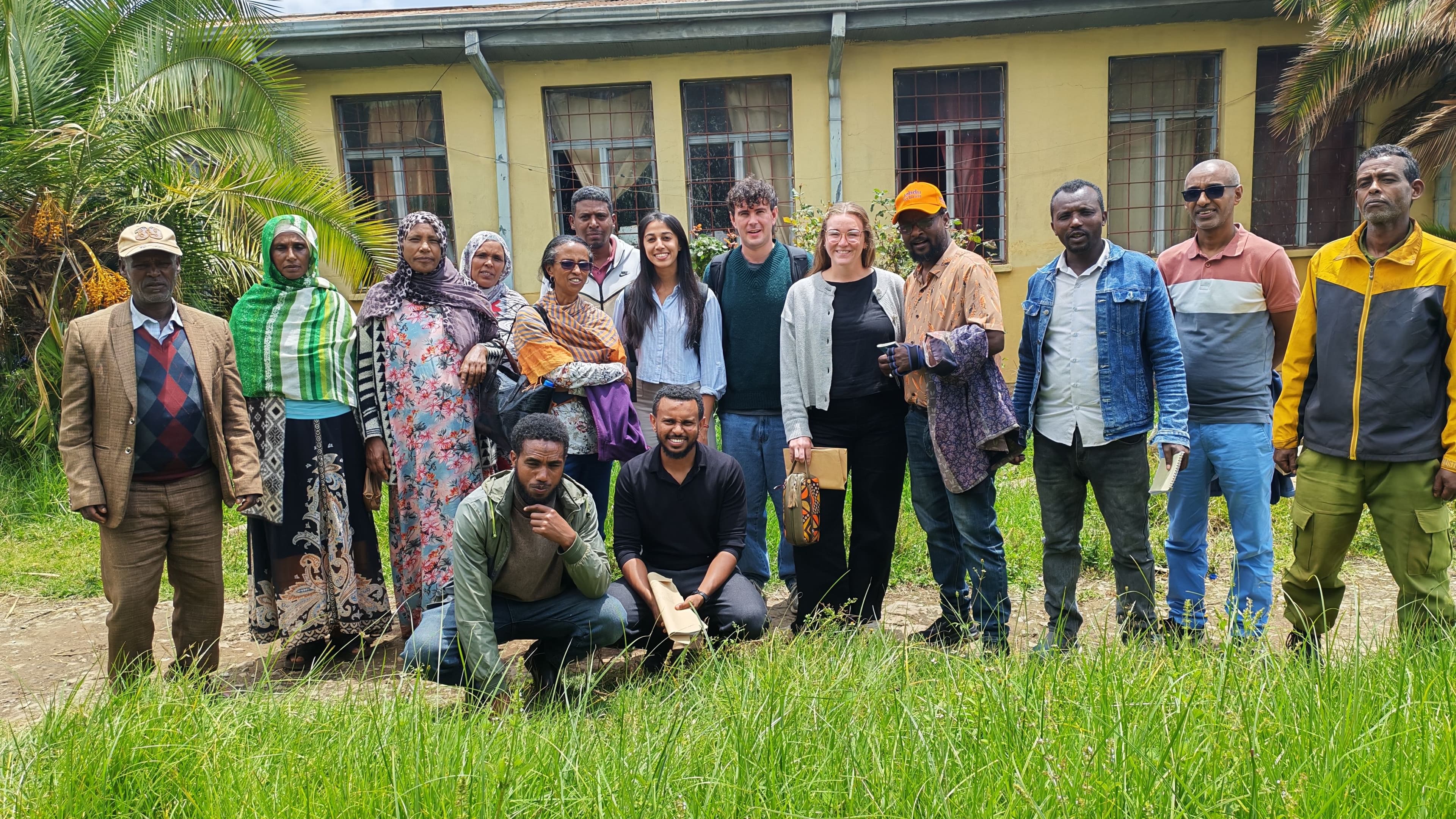
▲ Founders Pledge and PxD’s team with farmers in Tiyo District, Ethiopia.
During our recent site visit to grantees in Ethiopia, our team spent time with four organizations we’ve directed funding to across education, agriculture, and health.
Our work doesn’t end when a grant is delivered—we’re interested in finding out how funding from the Founders Pledge community translates into real outcomes. Site visits complement the research that we do from our offices, giving us a way to test our evaluations against what is happening on the ground.
In this blog, we share a short look at each organization and the work we fund, followed by why we think seeing that work firsthand is worth the trip.
Our grantees in action
We spent time with four grantees: Precision Development, Teaching at the Right Level Africa, Luminos, and the Clinton Health Access Initiative.
Precision Development
As part of a government-led forecasting system, Precision Development (PxD) delivers weather forecasts and farming advice to Ethiopian farmers over the phone. Thanks to PxD, farmers in Tiyo District, in the Arsi Zone, are now receiving phone calls with AI-supported on-set weather forecasts weekly. Getting that information a few days ahead can be crucial for protecting their harvests from monsoons and dry spells, improving incomes for farmers and their families.
Sitting down with six farmers in Tiyo who have been receiving Precision Development’s forecast calls reinforced that adoption is highly context-specific. We heard that some of these farmers were cutting calls short as they're too busy working on their farms when the calls come, and that some who received the information were unsure whether to follow it, because they see weather as God's domain. One farmer reflected that: “Those of us who accepted the message got better guidance and planning - meanwhile, those who held back are only now preparing their land, working off the moisture already in the ground."1
Encouragingly, data shared with us by PxD suggests the wider Ethiopia program is achieving a 61% pick-up rate and among those who answer the phone calls, 95% listen to the majority of the content. In Tiyo specifically, we witnessed farmers providing constructive feedback to PxD implementers on the call lengths and timings. Farming is risky by nature, and behavior change at this scale usually takes several seasons. Feedback from end-users is therefore critical to supporting this.
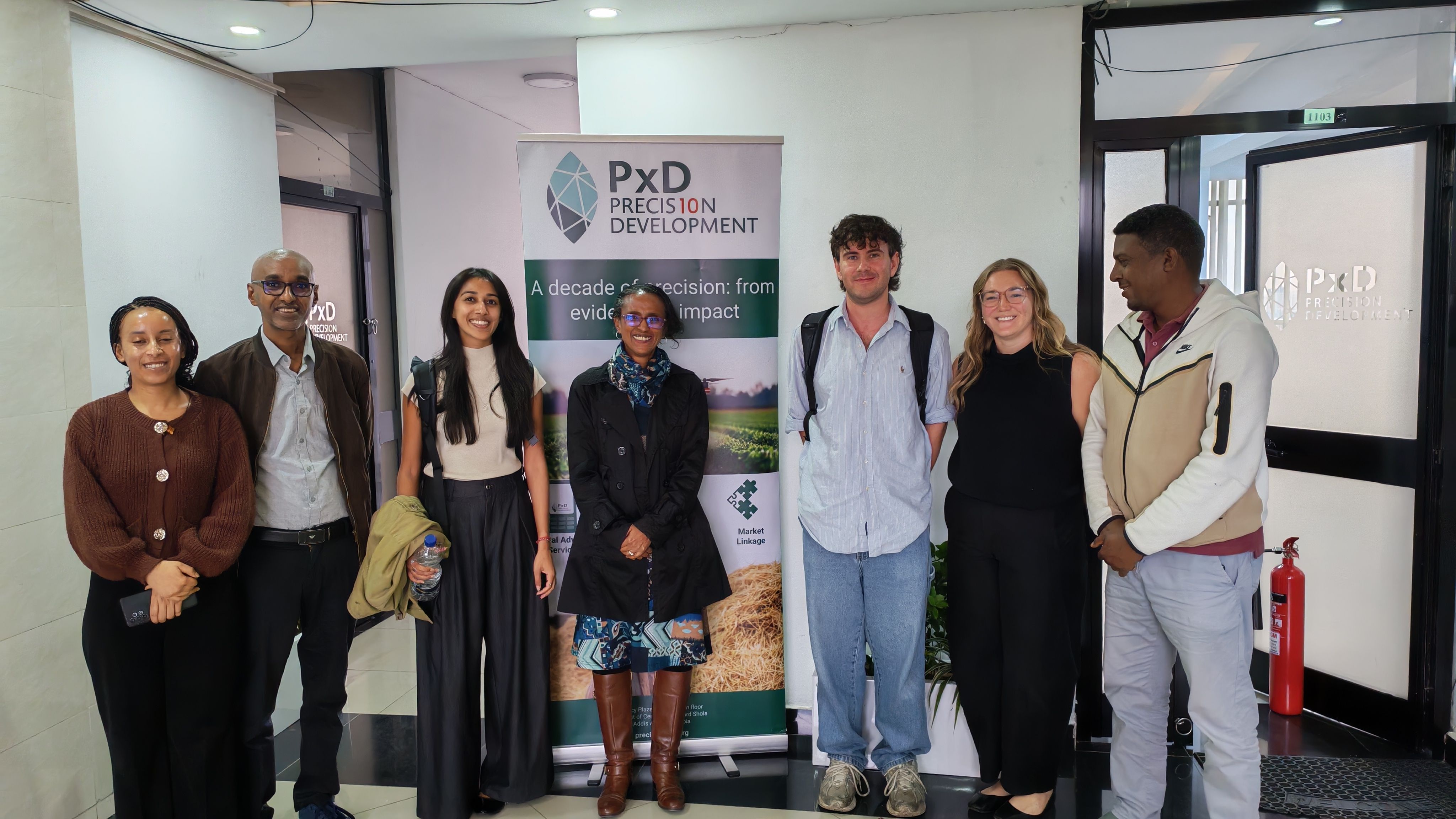 Founders Pledge and the PxD team.
Teaching at the Right Level Africa
Teaching at the Right Level Africa (TaRL Africa) provides technical assistance to help governments deliver foundational literacy and numeracy to children. Today the cost runs around $1 per child, most of it government-funded. Founders Pledge has funded TaRL Africa in multiple countries, and they have a new pilot in Ethiopia.
Early results from a small six-school pilot in the southwest are encouraging: on the figures reported to us, the share of Grade 1 pupils who could do subtraction climbed from 32% to 92% between baseline and midline, and those who could read a simple sentence from 27% to 89%. This is a small sample, but we find it promising.
Luminos
Luminos runs an accelerated education program for out-of-school children, condensing early-grade literacy and numeracy into a single year so that pupils can rejoin mainstream schooling. Since 2016 it has reached over 380,000 children in Ethiopia, and over 95% of them move on into government schools.
Our grant supports Luminos's move from running classrooms itself to a government-integrated model, which leans on existing teachers and school buildings to bring costs down. There is clear appetite from the government for the approach, and Luminos is working it into regional education bureaus and zonal structures.
“It was a great privilege to take part in the site visit to Ethiopia, particularly the opportunity to meet beneficiaries firsthand and contextualise our work, which I predominantly encounter through spreadsheets. In-person conversations have a level of candor and transparency that enhances our research process: not only do these visits allow us to stress-test our assumptions, but they present a chance to uncover additional areas where Founders Pledge and our donors can extend our impact.”
— Harry Street, Founders Pledge Applied Researcher
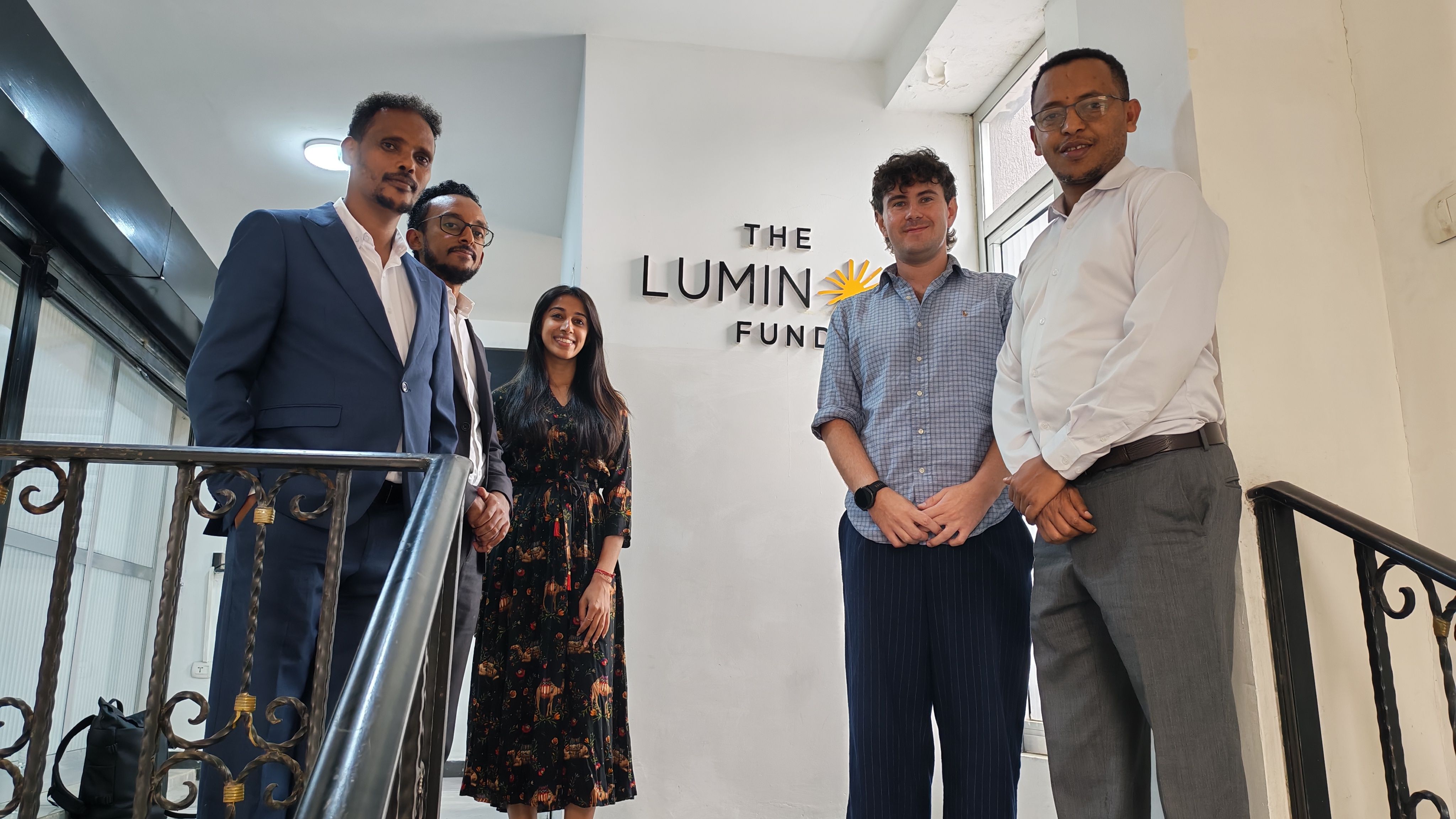 Founders Pledge and Luminos’ team at the Luminos Head Office, Ethiopia
Clinton Health Access Initiative
In 2025, we made a $2M grant to the Clinton Health Access Initiative (CHAI) as a joint grant from our Catalytic Impact Fund and our Rapid Response Fund, in the wake of the withdrawal of U.S. foreign aid. The grant supported ten countries across sub-Saharan Africa by establishing Technical Support Units (TSUs), which provide technical assistance to their Ministries of Health, helping them optimize their health budgets and maintain critical health services as external funding was falling away.
In Ethiopia, this work spans everything from the digital systems inside the health ministry to the larger job of supporting the restructuring of the country's essential health services package. Sitting with the team in person surfaced new openings to more highly cost-effective ways we could potentially fund CHAI's digital infrastructure and health-systems work, opportunities that would have been hard to spot from the outside.
"What struck me most was the resilience and ambition of every organisation and team we met. They were pushing to elevate their interventions despite real hurdles. I loved seeing how they trial and test ideas, use data to learn as they go, and iterate in real time; that culture of learning-by-doing strongly mirrors Founders Pledge's values, and it was genuinely inspiring to witness firsthand."
— Kavita Tailor, Founders Pledge MEL Officer
Why in-person site visits?
Beyond what we learned about each organization, the site visit reinforced why we make these trips at all.
We saw how context-specific variations affect outcomes
Adoption of new solutions, and the beliefs and social dynamics that shape it, matters greatly in many of the interventions we support. We make adjustments in our models to account for replicability and generalizability when comparing studies to real-world applications, but site visits give us a valuable opportunity to stress-test our assumptions. When we are modeling and evaluating, we try to think deeply about how context-specific variations will affect outcomes compared to the evidence we use. This is particularly important as we look more toward catalytic grants that are more abstract, and understanding local needs is crucial.
We surfaced new funding opportunities
Many of the most cost-effective opportunities we’ve seen have been ones we’ve shaped proactively, rather than ones that come ready-made. We find it valuable to speak firsthand with teams on the ground, who can show where there are time-sensitive and important funding needs. Hearing directly about the needs of local implementers and beneficiaries can be useful in shaping our wider research and grantmaking strategy, even if solely to better understand the local context and where additional room for funding can be used. This strengthens our proactive grantmaking by making it more targeted and timely.
We built in-person connections
In Ethiopia, our team also slotted in some time with local experts, such as contacts at the Africa CDC. Though this can be done over email, it's useful to build connections with local experts to deepen our understanding. It was also very valuable for us to speak to service recipients to hear their perspectives directly. This trip reinforced how important it is that we continue to pull from experts and people on the ground to ensure that these grants will have high impact and there is buy-in from relevant decision-makers.
Where we go next
All of the contextual findings from our site visits are captured in our internal knowledge base, so even when we only visit a handful of organizations, the learnings will be part of our feedback loop to research and can improve our modeling for similar interventions in the future. We're currently expanding our efforts in tracking and understanding the real-world impact from our work, of which site visits is one key part
If you’d like to support grantmaking designed to support catalytic change, consider donating to the Catalytic Impact Fund.
Notes
-
This was relayed through a local translator and may not be verbatim or fully accurate. ↩