One year of the Catalytic Impact Fund
Reflections on our first twelve months

In August 2025, we launched the Catalytic Impact Fund around an important question: how do you fund progress that outlasts the funding?
At the time, official development assistance was on track to fall by roughly a quarter over the year, and simply replacing lost aid wasn’t realistic given the scale of the cuts. This increased the urgency to help systems become less fragile in the first place, and we backed interventions where modest capital could unlock outsized, durable returns.
Twelve months and $4.7M across 11 grants later, the Fund has come a long way, and we still have much further to go.
In this blog, our team looks back on our impact over the first year of the Catalytic Impact Fund and where we’re headed next.
A year of high-leverage grantmaking
The Catalytic Impact Fund has made 11 grants in its first year. We specialize in grants that trigger systemic improvements, clear critical bottlenecks, or crowd in far larger follow-on funding.
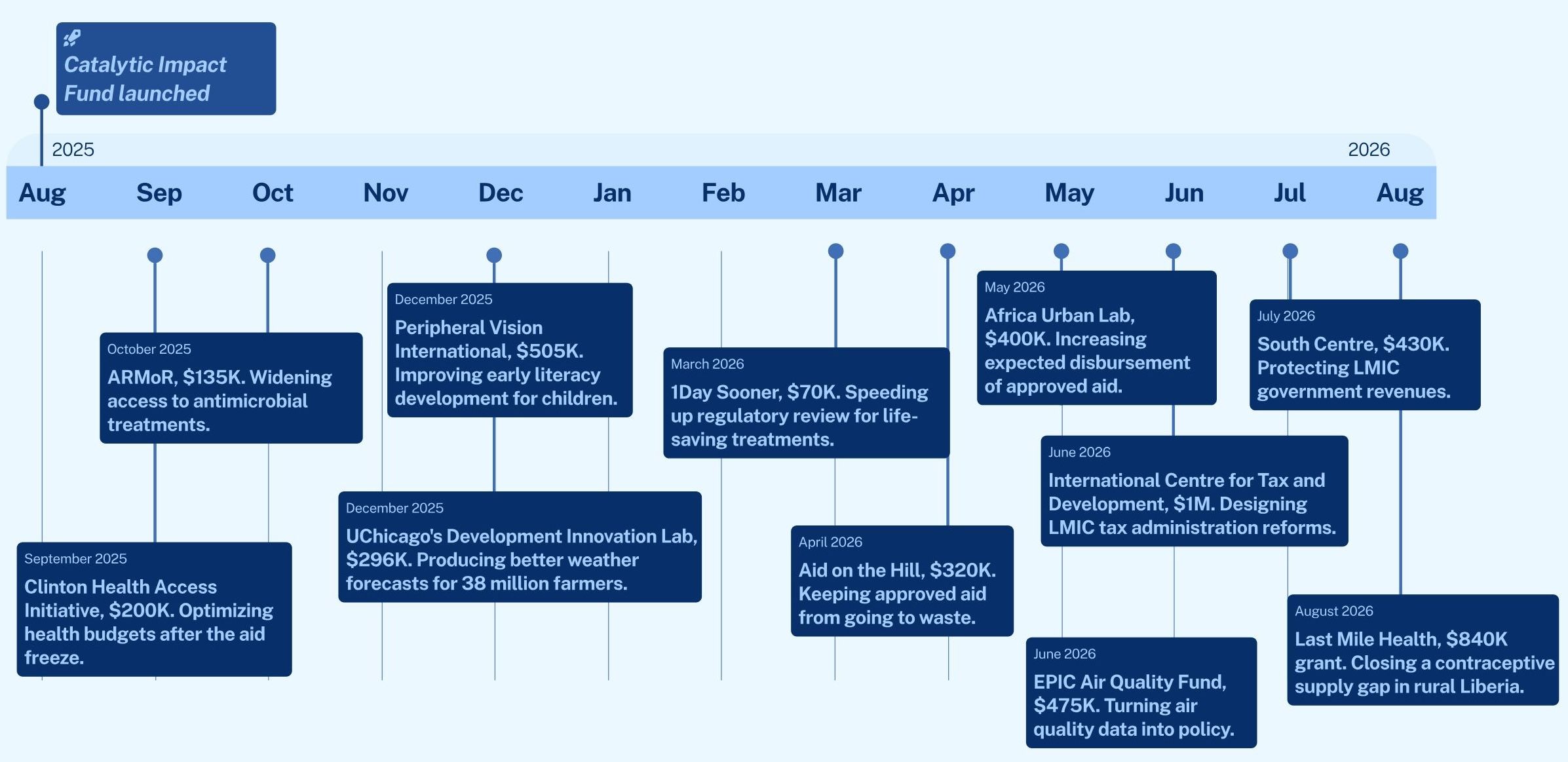
Here’s a closer look at the three biggest grants the Catalytic Impact Fund made in Year 1.
Designing equitable tax administration reforms
For most lower-income countries, the most durable alternative to volatile aid is a functioning tax system. Domestic revenue enables governments to fund their own public health and education systems without relying on foreign aid, yet many African nations are constrained by weak tax systems.
Our $1M grant to the International Centre for Tax and Development funds research conducted jointly with revenue authorities in up to ten sub-Saharan African partner countries. This is one of three recent grants that have focused on helping African governments invest in their financial futures beyond aid. We expect this grant to produce at least one major administrative reform whose revenue gains repay it many times over, plus build research capacity inside revenue authorities that outlasts any single project.
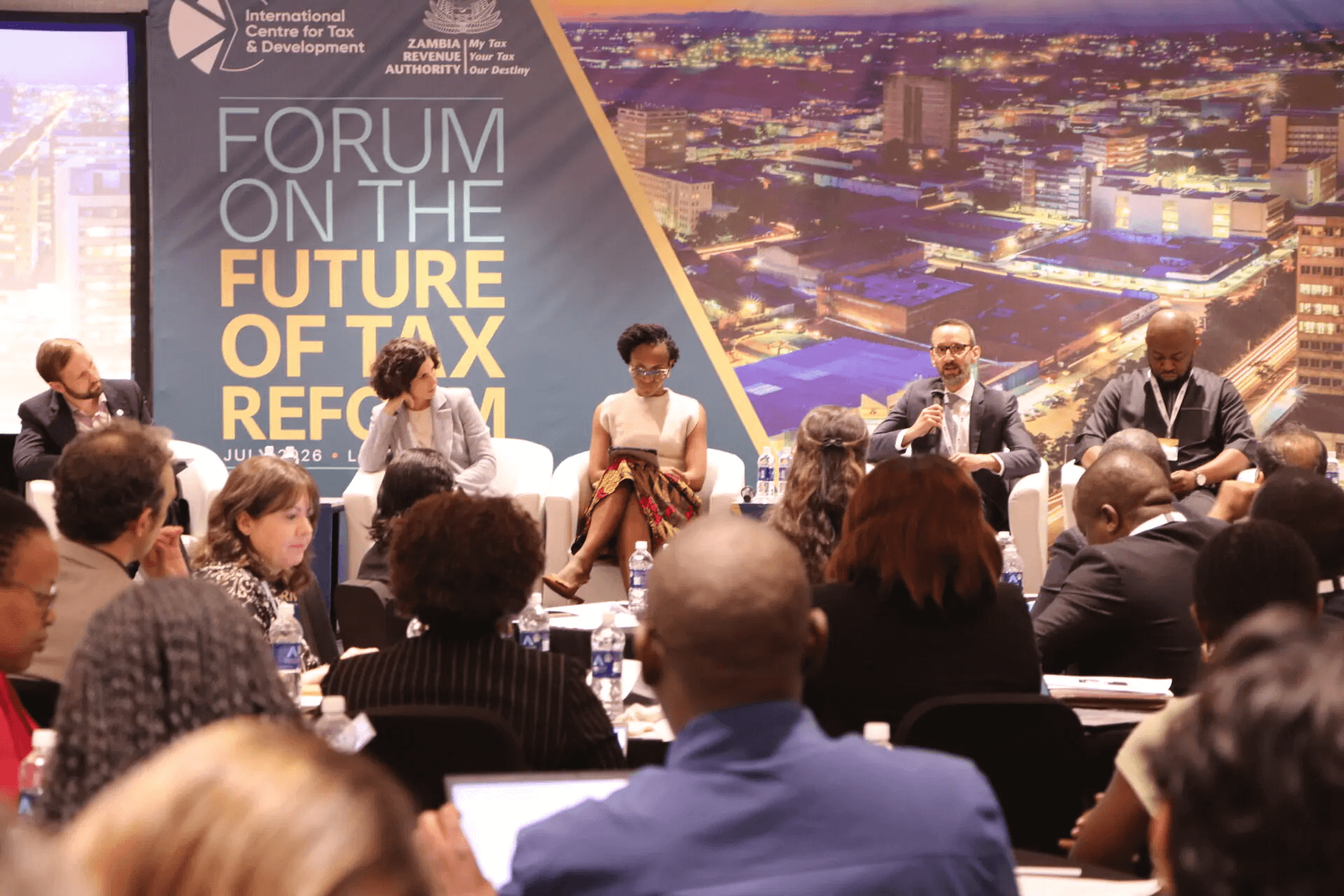 Source: ICTD
Matching contraceptive supply to meet demand in rural Liberia
Liberia has one of the highest maternal mortality rates in the world, at 628 deaths per 100,000 live births;1 this is even higher in rural settings.2 Close to a third of rural Liberian women have an unmet need for family planning, and there are strong preferences for injectables amongst those who use modern contraceptives.3
Injectable contraceptives, such as Sayana Press, can be delivered through community health workers and work well in rural settings: they can be stored at room temperature and are self-injectable. Liberia already has a national network of community health workers, formalized with the help of Last Mile Health, who could supply injectable contraceptives to the women who need them. The constraint sits upstream: the government and its donors order too few doses, so health workers run out.
Our $840K grant to Last Mile Health funds an 18-month pilot delivering Sayana Press, through 3,500 community health workers across eight counties, reaching roughly 25,000 women as a result of our funding. No one can currently show how much demand exists at the community level, because health workers have never held enough stock to find out. Our funding covers technical assistance work, which aims to catalyse evidence generated from the pilot so that the Ministry of Health and donors increase their procurement of modern contraceptives to meet demand.
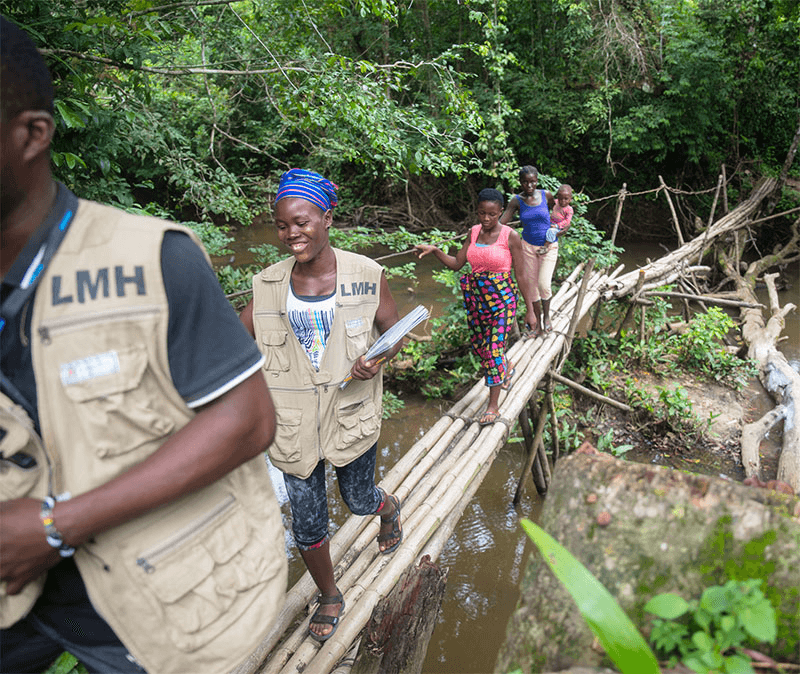 Source: Last Mile Health
Improving early literacy development for children
Over 85% of children in sub-Saharan Africa cannot read and understand a simple story by the age of 10; the World Bank estimates this to have been exacerbated by the COVID-19 pandemic.4 Peripheral Vision International is an award-winning African media non-profit that turns rigorous educational content into television children actually want to watch.
Our $505K grant to Peripheral Vision International funds the first season of a new PVI show, BB's Book Bus, made for 4–6 year olds. Most edutainment in the region stops at pre-literacy skills like letter recognition; BB's Book Bus is built around reading itself and the culture around it. We expect the series to reach more than two million young children. Broadcast media carry almost no additional cost per viewer, so even small gains in early literacy, spread across an audience that size, make the grant highly cost-effective.
 Source: PVI
Questions we asked in our first year
In our first year of research and grantmaking for the CIF, many questions arose about the best ways to use our time and funds. We’d like to share some of what we’ve learned.
Are catalytic funding opportunities available?
Yes, great opportunities exist, but they’re often not readily available. We’ve learned that we need to take a more active role in shaping priorities. This has been challenging at times, but has also revealed how important and neglected upstream thinking is.
Our early instinct was to review the opportunities that came to us. However, this led to two challenges: 1) we were seeing the same ideas that were shared with peer funders, making them relatively less neglected, and 2) ready-made applications cluster around the safest, most measurable ideas, which tend to be short-term direct delivery.
Without proactive conversation around the greatest potential for long-term catalytic effects, proposals reflected many donors’ preference for interventions with high-confidence, measurable evidence behind them, which is often not the work with the highest long-term expected value. As Coefficient Giving’s research on hits-based giving shows, philanthropy’s biggest wins have often come from harder-to-measure bets, where relatively small grants sparked outsized change.
The catalytic opportunities we were looking for mostly did not exist in finished form. They had to be sought out and, more often than not, co-created. We’ve increasingly moved from reactive reviewing to proactive prospecting.
How fast can we move?
One thing we are proud of is our speed of funding deployment in urgent situations, like the CHAI grant during the Ministry of Health budget cuts. When the moment demanded it, we could act.
Our scoping, though, was often too slow. Some of that delay was appropriate: a remarkably high cost-effectiveness bar, the fixed cost of learning new and complex areas, and the real difficulty of building a rigorous but decision-relevant method for “catalytic” models that no one had a template for. But some of the delay also happened when we conducted evaluations reactively without enough upfront prioritization, or when we were reluctant to cut off grant investigations too quickly.
With hindsight, we could have been more risk-seeking, given what was at stake. We have since tested and developed “catalytic” modeling best practices, moved towards focus-area specializations, and brought a little more flexibility into our threshold so we can consider a wider range of grants and move money more quickly. The aim for year two is to keep the rigor while scoping more efficiently.
How can we quantitatively model catalytic impact?
Catalytic grantmaking is much harder to measure than direct delivery because it depends on theories of change that involve advocacy, leverage, and/or large-scale systems change. These are challenging or impossible to randomize and credibly isolate measurable effects, unlike direct delivery.
Even so, we think it is worth putting numbers on deeply uncertain outcomes, breaking down the drivers into more measurable components that can be triangulated by relevant evidence, case studies, and/or expert context. This is not perfect, but the alternative to an explicit model is not no model; it is an implicit one, with assumptions hidden from scrutiny. Rough, honest numbers force our reasoning into the open, where colleagues and outside experts can challenge it.
Still, there are major risks to models that depend on hard to verify inputs with large uncertainty ranges. We’ve honed in on a few standard practices to reduce this risk:
- Counterfactual honesty: we ask whether a change would have happened anyway, without our intervention. Often, the honest answer is that it would have, just more slowly. In those cases (which is most), we model our contribution as acceleration rather than claiming full credit for the outcome. If the grant is aimed at leveraging other funding, we also discount for the counterfactual value of where that funding would have gone otherwise.
- Triangulation: We do our best to triangulate, deliberately seeking out multiple sources to verify key inputs, including the people closest to the decision and those most likely to disagree with our best guess. Where we can, we also build the same estimate in more than one way, like from the top down and the bottom up. When two routes to the same number disagree sharply, the problem is usually in our reasoning rather than our inputs.
- Modeling the full range of outcomes: we now run most of our potential grants through a model thousands of times across the plausible range for every input—a technique called Monte Carlo simulation—which shows us the full spread of results a grant might produce.
Every model of this kind carries a risk of bias. On every grant, we “red-team” the numbers with peer researchers to see if they can “break” the conclusions. We would rather attempt the estimate with transparent logic and show our working than fund on instinct alone.
What does it take to create systems change?
Interventions are deeply context-specific, and the conditions that make a reform work in one country are often missing in the next. Scalable systems change is rarely a copy-paste job. It usually means talking at length to people on the ground, and ideally being present in the context ourselves, which is something we want to do more of.
Where we have grown more confident is in what a strong bet looks like. The best bets tend to combine three things:
(1) genuine institutional demand for the change
(2) a large population within reach
(3) a low counterfactual, meaning that without the grant, outcomes for that population are unlikely to improve much, or soon, through other channels.
When all three are present, a small grant can move something much larger. When they are not, leverage on paper rarely survives contact with reality.
Where we’re headed next
We built the Catalytic Impact Fund on a theory of change: modest, well-placed capital can unlock far larger and more durable change. Catalytic potential is not a substitute for our usual criteria of importance, neglectedness, and cost-effectiveness; it is a layer on top of them. Among opportunities that already clear a high bar, we look for the grants that have a viable pathway to improve outcomes even after the money is spent. The aid disruption of 2025 made that premise feel especially urgent.
Does this logic still hold as a new wave of philanthropic capital arrives? Could new funding simply fill the gaps directly and make the catalytic framing less necessary?
If anything, we think catalytic grants are even more worth funding now. The aid disruption didn’t only decrease funding; it also increased discourse and awareness of the challenges in the way previous LMIC GHD programs were designed and incentivized. This creates an opportunity to build on those lessons with the more flexible and prioritized inflow of capital.
Prioritizing durability now raises the odds of long-term, self-supporting progress, rather than a system that leans on redistribution that may not last. We hold this view loosely, with one firm caveat: not every problem can or should be solved catalytically, and some needs simply require direct delivery funding today.
We came into this year unsure whether a fund built around catalytic change could find enough to do at $10 million in grants per year. We now know it can, and we’re excited to move into our second year, investigating more avenues for cost-effective and durable catalytic impact across global health and development.
Notes
-
World Bank 2023 Data for Liberia shows 628 deaths per 100K live births. This compares to an average of 448 per 100K live births across Sub-Saharan Africa. ↩
-
DHS Data 2019-2020 Section 7 ↩
-
World Bank The State of Global Learning Poverty: 2022 Update. Annex 4, which includes simulations for the impact that the COVID-19 pandemic had on learning poverty rates from 2022 ↩